
By Dr. Amber Deneén Chapman-Gray & Dr. Tabitha Chapman-Gray
When discussing domestic violence amongst victim service providers, the focus is on the adult victim. This sequalae of this epidemic necessitates urgency with the medical and psychological conditions the victims are often experiencing. Therefore, the focus in public awareness and provider education on the adults is justified. However, there is often another population, co-existing within that same home environment. This population’s suffering is quieter, less visible, and less studied, leading to an overall under-treated person. What population are we overlooking? Children.
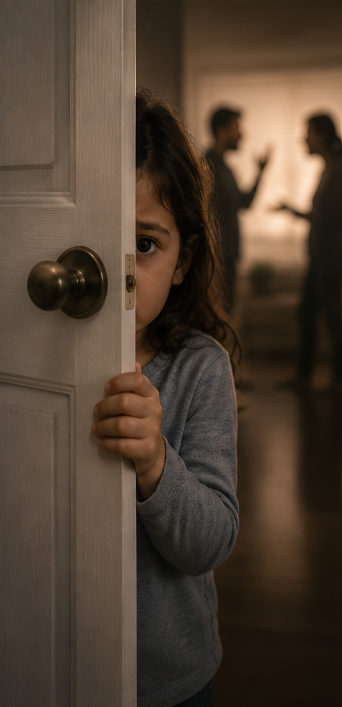
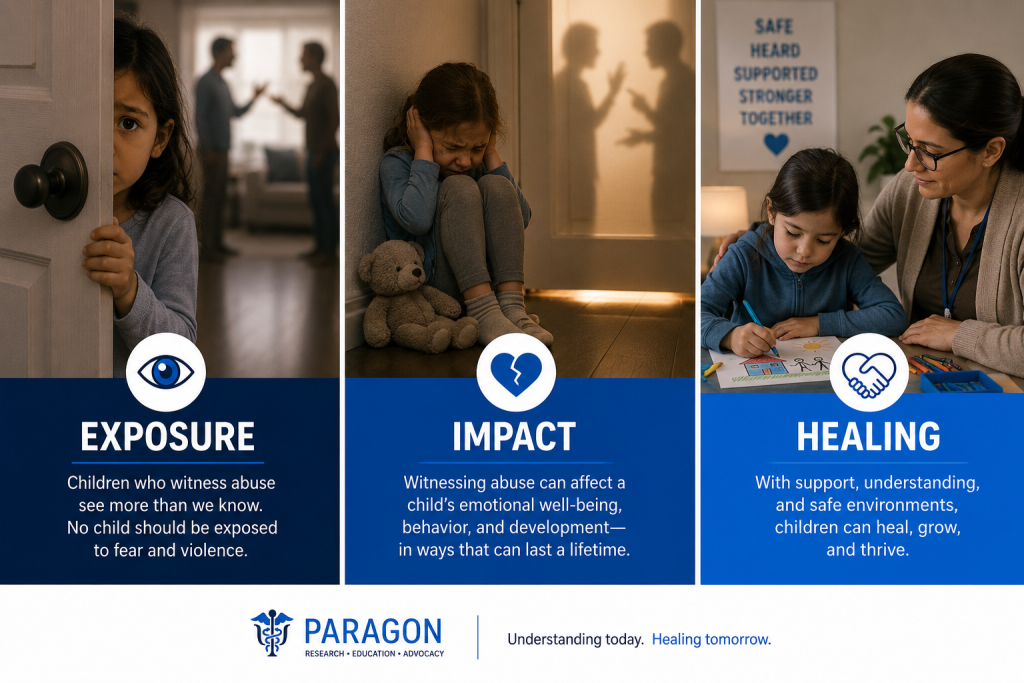
In police reports, soap notes, and court documents, children are frequently described as “witnesses” to domestic violence. However, the term “witness” is insufficient. It implies passivity, distance, observation, and separation. What is commonly dismissed, however, is the studies that demonstrate that children are not merely observers of violence, but they are embedded within it. They hear it. They anticipate it. They absorb it. They adapt to it. They carry neurological imprint of violence, as if it directly happened to them (Callaghan et al., 2018). For many children, the home is not a place of safety.
Instead, home is a place of unpredictability. Nights are disrupted by raised voices, breaking objects, and escalating tones that signal danger is imminent and many times, no one is there to provide comfort in quite the way its needed. This chronic exposure to violence in the home creates a trauma-response of hypervigilance. Children learn to listen to subtle shifts in sound, changes in posture, and emotional intensity, as they observe the dynamics of their so-called trusted caretakers. Their nervous systems remain in a constant state of alert, prioritizing survival over rest, amateur risk-reduction over curious learning, and parentified and pacifying behaviors over healthy development. These coping mechanisms extend far beyond the home.
Hypervigilance follows them into classrooms, peer relationships, and their internal experience of the bigger external world around them. Children exposed to domestic violence often struggle academically. This is not because of a lack of ability. Cognitive resources are redirected toward managing fear and uncertainty, and there’s little energy left for learning (Carnevale et al., 2020). Concentration become more difficult as well. Ultimately, hypervigilance often results in sleep deprivation, which emotional dysregulation, as well as anxiety and depression. These mental states begin to take hold early and often persist across development (Doroudchi et al., 2023). As they grow up, they fall to additional coping mechanisms that further fracture their delicate system. Alcohol, drugs, rebellion, and lack of cohesion in overall life satisfaction (Hornor, 2005). The overall psychological toll is profoundly damaging. It’s hard to pull up from the statically likely crash that occurs in adolescence and early adulthood. The physiological effect combines into physical maladaptation such as fibromyalgia, autoimmune disorders, gastrointestinal disorders, and more (Clarke et al., 2019).
But let’s go back to the children in the room where it happens. Children may only witness their caretakers embroiled in battle, which result in many of the consequences just discussed and yet many experience much more. This is what is now termed as polyvictimization (Finkelhor et al., 2007; Gray & Chapman, 2023). They are not only witnessing violence between caregivers, but are often direct victims of emotional, physical, or what children view as punitive abuse themselves. The boundaries between witnessing and experiencing collapse. Violence becomes both observed and endured (Gray & Chapman, 2023). This dual exposure complicates how children process their reality. Children naturally are developing biologically, emotionally, and cognitively. When a child is experiencing polyvictimization and attempting to make sense of harm occurring within their primary attachment relationships, internal conflict is stored in their neurology. Their sense of self is fractured, in a sense (Katembu et al., 2023). One thing they know and can count on is that the person who is supposed to protect them is also a source of fear (Gray, 2023a; 2023b). The home, which should regulate, instead destabilizes. Over time, these experiences shape behavioral patterns.
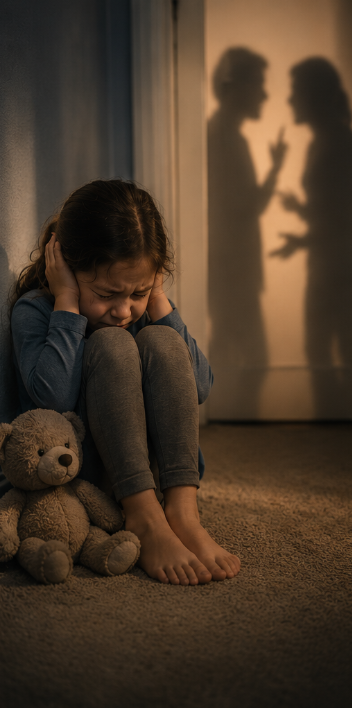
Research indicates that children exposed to domestic violence may model relational dynamics they observe, carrying them into adolescence and adulthood (Forke et al., 2018; Gray, 2023a; 2023b). For some, this manifests as aggression. For others, it appears as withdrawal, compliance, or self-blame. In more severe cases, chronic exposure has been linked to long-term personality and behavioral disturbances, including traits associated with callousness or emotional detachment (Dargis & Koenigs, 2017; Gray, 2023b). There are also biological consequences.
Chronic exposure to violence elevates stress hormones, altering neurodevelopment and impacting regulatory systems responsible for emotion, attention, and impulse control (Theall et al., 2017). These are not temporary disruptions. They are developmental adaptations to sustained threat. The sequelae of exposure to domestic violence in childhood are both biological and psychological, and they often extend far beyond the period of direct exposure. Chronic activation of the stress response system disrupts normal neurodevelopment, particularly in regions responsible for emotional regulation, executive functioning, and threat detection (Gray; 2023b; Teicher et al., 2016). Prolonged elevations in cortisol and other stress hormones can alter brain architecture, increasing vulnerability to anxiety disorders, depression, and impaired cognitive processing (Theall et al., 2017; Doroudchi et al., 2023). These biological adaptations are not maladaptive in context; They are survival responses to an unsafe environment. However, when sustained over time, these adaptations recalibrate a child’s baseline functioning toward hyperarousal or, conversely, dissociation.
Psychologically, children may internalize the violence as normative, shaping their beliefs about relationships, control, and self-worth (Dutton, 2018). As discussed earlier in the case of a singular type of victimization (“witnessing” domestic violence), this internalization can manifest as chronic fear, emotional numbing, maladaptive coping strategies such as disordered eating, or difficulties forming secure attachments.

The cumulative burden of these experiences is further compounded in cases of polyvictimization, where exposure to domestic violence co-occurs with direct abuse, intensifying both symptom severity and long-term risk (Gray & Chapman, 2023; Dodaj, 2020). Over time, these intersecting biological and psychological injuries can contribute to enduring patterns of behavioral dysregulation, impaired social functioning, and increased susceptibility to revictimization or perpetration in later life (Forke et al., 2018). Understanding these sequelae is important. Without intervention, the effects of domestic violence are not confined to childhood. They become embedded within the developing individual, shaping health, behavior, and relational patterns across the lifespan (Gray, 2023a; 2023b; Gray & Chapman, 2023). Yet, despite the breadth and depth of impact, children remain largely invisible in intervention frameworks.
Services often prioritize the adult victim, while children are treated as secondary considerations and even as property to be split or controlled (Hardesty et al., 2024). This approach fails to recognize that children are experiencing parallel trauma. Their needs are not incidental. They are central. To address this, a shift in understanding is required. Children exposed to domestic violence must be seen through a trauma-informed lens that acknowledges the full scope of their experience. This includes recognizing their exposure as direct victimization, understanding the role of coercive control in shaping their environment, and addressing the cumulative effects of fear, instability, and disrupted attachment (Hardesty et al., 2024; Walker-Descartes et al., 2021). Parents, caregivers, and providers must move beyond the assumption that children are pliable by default.
Transformation is built through safety, reinforced through consistency, and sustained through intervention. Without it, violence will not end. It continues, reshaping itself across generations. Children are not translucent passersby to this harm. They are who humans, living inside it (Hardesty et al., 2024). Their silence is not absence, it is evidence. Ignoring the effects on children does not protect them. It protects the cycle of abuse. Ending domestic violence means confronting its full scope, including the children it quietly consumes.
References
Bottoms, B. L., Peter-Hagene, L. C., Epstein, M. A., Wiley, T. R., Reynolds, C. E., & Rudnicki, A. G. (2016). Abuse Characteristics and Individual Differences Related to Disclosing Childhood Sexual, Physical, and Emotional Abuse and Witnessed Domestic Violence. Journal of Interpersonal Violence, 31(7), 1308–1339. https://doi.org/10.1177/0886260514564155
Callaghan, J. E., Alexander, J. H., Sixsmith, J., & Fellin, L. C. (2018). Beyond “witnessing”: Children’s experiences of coercive control in domestic violence and abuse. Journal of Interpersonal Violence, 33(10), 1551-1581. https://doi.org/10.1177/0886260515618946
Carnevale, S., Di Napoli, I., Esposito, C., Arcidiacono, C., & Procentese, F. (2020). Children witnessing domestic violence in the voice of health and social professionals dealing with contrasting gender violence. International Journal of Environmental Research and Public Health, 17(12), 4463. https://doi.org/10.3390/ijerph17124463
Clarke, D., Schubiner, H., Clark-Smith, M., & Abbass, A. (2019). Psychophysiologic Disorders. Trauma Informed, Interprofessional Diagnosis and Treatment. Psychophysiologic Disorders Association.
Dargis, M., & Koenigs, M. (2017). Witnessing domestic violence during childhood is associated with psychopathic traits in adult male criminal offenders. Law and Human Behavior, 41(2), 173–179. https://doi.org/10.1037/lhb0000226
Dodaj, A. (2020). Children witnessing domestic violence. Journal of Children’s Services, 15(3), 161-174. https://doi.org/10.1108/JCS-04-2019-0023
Doroudchi, A., Zarenezhad, M., Hosseininezhad, H., Malekpour, A., Ehsaei, Z., Kaboodkhani, R., & Valiei, M. (2023). Psychological complications of the children exposed to domestic violence: a systematic review. Egyptian Journal of Forensic Sciences, 13(1), 26. https://doi.org/10.1186/s41935-023-00343-4
Dutton, D. G. (2018). Witnessing parental violence as a traumatic experience shaping the abusive personality. In Children Exposed to Domestic Violence (pp. 59-67). Routledge.
Finkelhor, D., Ormrod, R. K., & Turner, H. A. (2007). Poly-victimization: A neglected component in child victimization. Child Abuse & Neglect, 31(1), 7–26. https://doi.org/10.1016/J.CHIABU.2006.06.008
Forke, C. M., Myers, R. K., Fein, J. A., Catallozzi, M., Localio, A. R., Wiebe, D. J., & Grisso, J. A. (2018). Witnessing intimate partner violence as a child: How boys and girls model their parents’ behaviors in adolescence. Child Abuse & Neglect, 84, 241-252. https://doi.org/10.1016/j.chiabu.2018.07.031
Gray, A. D. (2023a). Abuse: Mothers’ Violence Against Children. In: Shackelford, T.K. (eds) Encyclopedia of Domestic Violence. Springer, Cham. https://doi.org/10.1007/978-3-030-85493-5_4-1
Gray, A. D. (2023b). Father’s Violence Against Children: Abuse. In: Shackelford, T.K. (eds) Encyclopedia of Domestic Violence. Springer, Cham. https://doi.org/10.1007/978-3-030-85493-5_2-1
Gray, A. D., & Chapman, T. M. (2023). Family Polyvictimization: Violence Against Children. In: Shackelford, T.K. (eds) Encyclopedia of Domestic Violence. Springer, Cham. https://doi.org/10.1007/978-3-030-85493-5_540-1
Hardesty, J. L., Ogolsky, B. G., & Akinbode, T. D. (2024). Coparenting and intimate partner violence. Family Court Review, 62(1), 131–145. https://doi.org/10.1111/fcre.12769
Hornor, G. (2005). Domestic violence and children. Journal of Pediatric Health Care, 19(4), 206-212. https://doi.org/10.1016/j.pedhc.2005.02.002
Katembu S, Zahedi A and Sommer W (2023) Childhood trauma and violent behavior in adolescents are differentially related to cognitive-emotional deficits. Frontiers in Public Health 11:1001132. https://doi.org/10.3389/fpubh.2023.1001132
Teicher, M. H., Samson, J. A., Anderson, C. M., & Ohashi, K. (2016). The effects of childhood maltreatment on brain structure, function and connectivity. Nature Reviews Neuroscience, 17(10), 652–666. https://doi.org/10.1038/nrn.2016.111
Theall, K. P., Shirtcliff, E. A., Dismukes, A. R., Wallace, M., & Drury, S. S. (2017). Association between neighborhood violence and biological stress in children. JAMA Pediatrics, 171(1), 53-60. https://doi.org/10.1001/jamapediatrics.2016.2321
Walker-Descartes, I., Mineo, M., Condado, L. V., & Agrawal, N. (2021). Domestic violence and its effects on women, children, and families. Pediatric Clinics, 68(2), 455-464. https://doi.org/10.1016/j.pcl.2020.12.011
About the Authors
Dr. Amber D. Chapman-Gray, PhD, DBH, is a forensic psychologist, healthcare educator, and violence prevention advocate specializing in domestic violence, trauma-informed systems, victimology, and behavioral health. She is the CEO of Gray’s Trauma-Informed Care Services Corp and has contributed to Springer Nature’s Encyclopedia of Domestic Violence and Encyclopedia of Religious Psychology and Behavior, as well as ABC-CLIO Solutions’ Women and Violence: Global Lives in Focus. Her work focuses on domestic violence prevention, coercive control, child abuse prevention, and trauma-informed systems reform.
Dr. Tabitha M. Chapman-Gray, PhD, is a Marriage and Family Therapist, forensic psychology professional, academic author, and victim advocate specializing in trauma, coercive control, and cultic abuse. She serves as Executive Director of The Freedom Train Project Incorporated and works in domestic violence prevention, survivor advocacy, and trauma-informed support services. Dr. Chapman-Gray was also featured in the STARZ documentary series Seduced: Inside the NXIVM Cult and Tubi Documentary Branded & Brainwashed: Inside NXIVM, which each examined coercive control, abuse, and survivor experiences within NXIVM.